Let's Test Our Relay and Water Pumps
Welcome back to our weather station project.
Up to this point, we’ve been building a weather station that measures temperature, humidity, soil moisture, and light. That system is already working, and it gives us data about the environment our plants are growing in.
The next challenge is moving from measuring conditions to responding to them. To do that, we need to control hardware — specifically, water pumps.
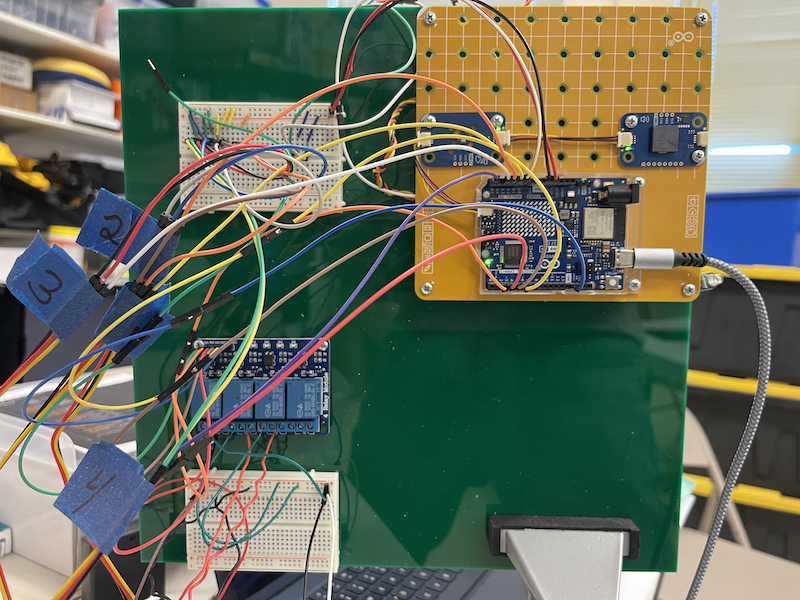
Because pumps are motors and require their own separate power source, we didn’t add them directly into the main weather station sketch. Instead, we created a separate test sketch whose only job was to control a relay and confirm that the pumps could be safely turned on and off.
In this test sketch, the Arduino sends simple on and off signals to the relay. The relay acts like an electronically controlled switch, allowing the Arduino to safely control a separate power supply that runs the pumps. When the relay closes, water flows. When it opens, the pump turns off.
This step is important because complex systems are built in stages. We test each subsystem independently before combining everything together.
Now that the relay and pump system works on its own, the next step is integration. We’ll combine the weather station data and the pump control logic to create a small indoor grow system that can monitor conditions and automatically respond by watering plants when they need it.