Let's use stakes to lift plants off the ground.
The Hidden Benefits of Staking Your Garden
Last week in the student garden, we traded our weeding tools for bamboo rods, twine, and wooden stakes. The assignment was simple but physically transformative: give our rapidly growing tomato and cucumber plants a framework to climb. As we anchored the supports into the soil and gently tied up the vines, a hand shot up. “Why do we have to do this? Wouldn't they just grow fine on the ground?”
It’s a fair question. In the wild, many of these plants are perfectly content sprawled across the forest floor or open meadows. But in a curated garden space, guiding plants upward isn't just about neatness—it’s a masterstroke of plant health, space optimization, and artistry.
If you or your own young growers have ever wondered why we build structures for our vegetables, here is exactly why training your plants vertically changes everything.
1. Keeping Fruit Safe and Clean
When heavy fruits like tomatoes or long cucumbers rest directly on damp soil, they invite trouble. The earth is full of moisture, beneficial microbes, and insects. While soil is wonderful for roots, it is a hazard for ripening fruit, frequently leading to rot, blemishes, and pest damage. Elevating the plant keeps the harvest clean, pristine, and well out of reach of ground-dwelling critters who view your low-hanging cucumbers as an open buffet.
2. Maximizing Airflow and Preventing Disease
If you leave a tomato plant to its own devices, it becomes a dense, tangled mat of foliage close to the ground. This traps humidity and morning dew, creating a perfect petri dish for fungal spores like early blight and powdery mildew. By staking and gently spreading out the branches, we dramatically increase airflow through the leaves. When air can pass freely through the canopy, moisture evaporates quickly after a rain, preventing diseases before they can ever take hold.
3. Harnessing Every Drop of Sunlight
Sunlight is food for plants. When a vine is slumped over itself, the upper leaves shade out the lower ones, severely reducing the plant’s overall capacity for photosynthesis. Vertical staking acts like an architectural upgrade, organizing the leaves into an efficient vertical solar panel. Every leaf gets its fair share of sunshine, which directly translates to more energy, stronger growth, and ultimately, sweeter and more abundant fruit.
“By building upwards, we aren't just saving space; we are actively engineering a healthier microclimate for each plant to thrive.”
4. Transforming the Garden into Living Art
Beyond the strict agricultural science, there is an aesthetic joy to vertical gardening. Traditional wooden stakes are incredibly functional, but staking also opens the door to immense creativity. You can build rustic bamboo teepees, elegant woven willow structures, or clean overhead trellises where cucumbers hang down like green chandeliers. It transforms a flat plot of land into a three-dimensional landscape, adding depth, texture, and visual drama to the space.
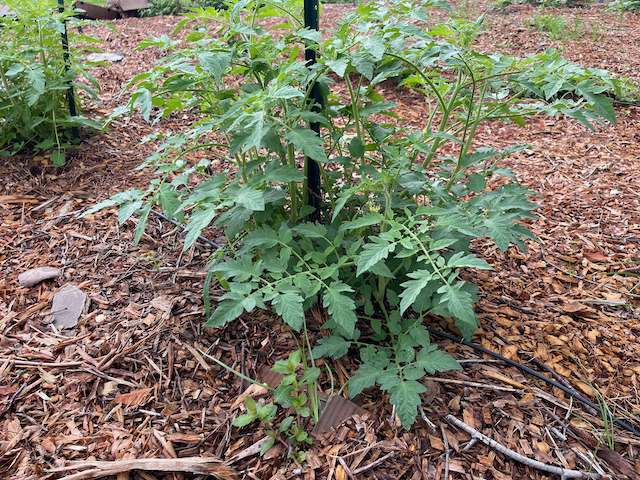
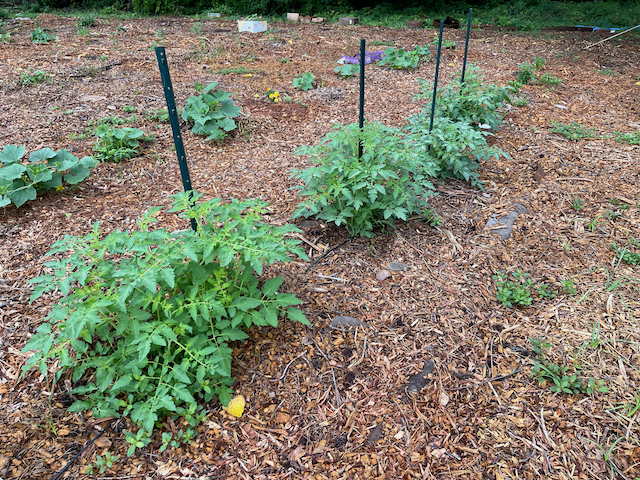
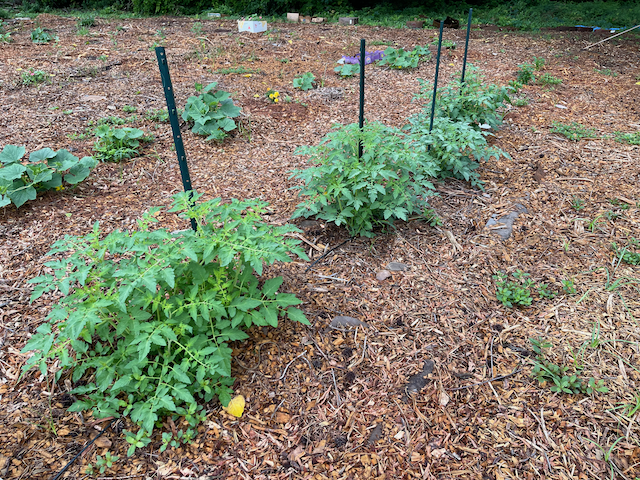
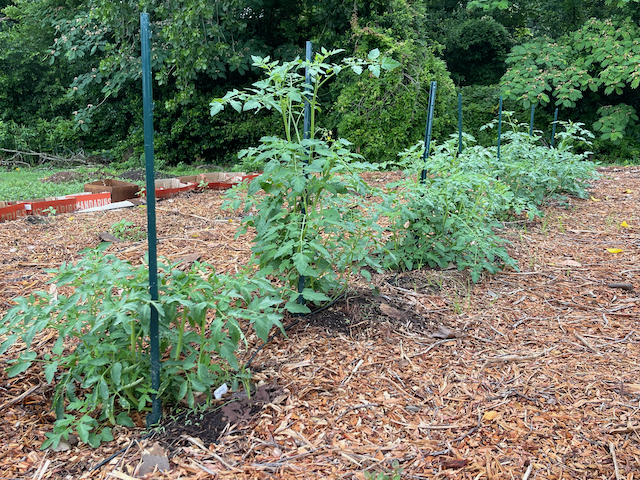
In our student garden, we started with what we had: slim, salvaged metal fence posts. As our tomatoes and cucumbers continue to stretch toward the sky, our next step will be a lesson in creative upcycling. We’ll be hunting for whatever materials we can find — discarded branches, scrap wood, or leftover twine — to piece together an ongoing, custom support system. This scrappy, resourceful approach doesn't just save money; it teaches the students a valuable lesson in sustainability, proving that a thriving garden is built on imagination and adaptability, not expensive equipment.