Let's use cardboard containers to maximize our soil and limited space.
In gardening, as in life, things don’t always go exactly according to plan. This week, our garden club hit a classic grower's dilemma: we had a beautiful batch of healthy, vibrant sunflower seedlings ready to meet the earth, but zero space left in our traditional row beds.
Instead of seeing a problem, we saw an opportunity for a little creative problem-solving—and a fantastic teaching moment for the students.

The Challenge: More Plants Than Space (and Soil!)
Sunflowers need a good foundation to get established, but filling a massive, empty raised bed with brand-new soil on the fly wasn't an option. We had to figure out how to give these 10 or so remaining seedlings a long-term home for the growing season without breaking the bank or wasting resources.
The solution? Upcycling and container planting right inside the raised beds.
The Lesson: Delicate Transplants & Cardboard Containers
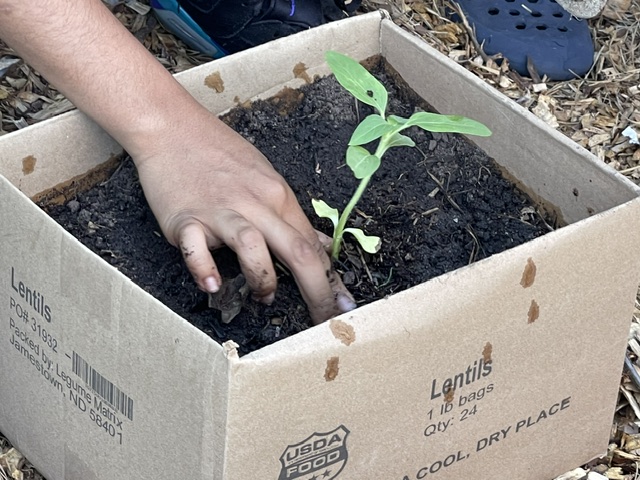
We grabbed a handful of sturdy cardboard boxes and cut them down to a depth of about 10 inches. This depth is the "sweet spot" for young sunflowers—it gives their roots plenty of room to stretch out, stabilize, and get firmly established. By filling just the boxes instead of the whole raised bed, we maximized our available soil perfectly.
The students then stepped up to handle the most delicate part of the day: the transplanting process. Moving young seedlings can be stressful for the plants, but the students did an incredible job. They learned how to:
- Gently loosen the seedlings from their starter trays without damaging the tender root systems.
- Handle the plants by their leaves or root balls, never the fragile stems.
- Settle them safely into their new 10-inch deep cardboard homes.

The Long Game: Building Future Soil
Once the sunflowers were nestled into their boxes, we placed the entire setup directly into our existing raised beds.
The best part about using cardboard? It’s a win for the long-term health of our garden. As the sunflowers grow and thrive throughout the season, the cardboard boxes will naturally break down and decompose. They will blend right into the surrounding compost, adding valuable organic matter to the earth and building a rich base of soil for future seasons.
By the end of the day, every single sunflower had a permanent home for the summer, and the students walked away with practical skills in plant care, sustainability, and resourcefulness. Sometimes, the best lessons happen when you have to think outside the box—by planting inside one!